For understanding the movie, you need to know the basic ideas of Sigmund Freud's structural model of the psyche — the Super-Ego, the Ego, the Id. This is the general idea of Mulholland Drive. In the dream we see the duel, the fight, the cat and mouse game between the Super-Ego and the Id.
On one side there is Diane's Super-Ego. It was built up by the high moral requirements of her parents, her small-town life, etc. It is Diane's conscience. On the other side there is Diane's Id — her sexual drive, her libido, her self-preservation instinct. Diane has a strong Id. And it is important that we know that her parents are the main reason why Diane's sexual drive was repressed for a long time. The Id tries to suppress the truth: I don't kill somebody. Camilla is not dead. I'm a nice and innocent girl.
In the first part of the dream, Diane's repressed sex drive is dominating the Id, but then it's her unleashed sex drive representing the Id. The Super-Ego tries to destroy the illusion. It wants Diane to face the truth: I am guilty! Camilla was real. Camilla is dead! I killed her! The Super-Ego attacks the Id permanently. In the end we see what an immense impact this inner conflict has on Diane's ego. She is slowly going mad, she has hallucinations, and finally the only way out is to commit suicide.
Notice the colour symbolism:
The colour of the Super-Ego is blue.
The colour of the repressed (sex drive) Id is pink.
The colour of the unleashed Id is red.
The Id and the Super-Ego are acting very trickily and cleverly. Situations change from one second to another. Please remember Woody in this context — he brings it to the point: acting is reacting. Try to see the movie this way and I'm sure you will discover things you've never noticed before. Imagine how the Super-Ego is permanently sending soldiers to attack the Id.
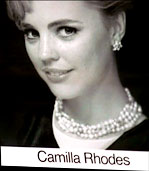
Here is one example: the first scene with Adam Kesher. The Super-Ego is attacking — it wants to refresh Diane's memory of Camilla. The mob man opens up a suitcase (symbolizing that Diane locked up the memory of Camilla) and pulls out a photo of Camilla Rhodes. The Id reacts. It replaces the photo of Camilla with a photo of the party girl (the one who was kissing Camilla). Next try of the Super-Ego: This is the girl! The Id defends: Adam is refusing. The Id is finally finishing this dangerous situation by having Adam serve the mafia man a bad espresso — and then itself attacks the Super-Ego by having Adam attack the car of the mafia men. The Super-Ego is losing this battle. The Id is too strong.
Cut — Betty is looking for Rita, making sure that the illusion is not destroyed. Cut — the Super-Ego is planning the next attack: "Then we all shut down..." Yes, Mr. Rogue represents the Super-Ego!
...and the battle goes on...
Please watch the audition scene with Woody and imagine how the Id is talking face to face to the Super-Ego. This is the moment when the Super-Ego is gaining the advantage ("slam dunk") — it's a trap, it's the turning point. Pay attention to the colours: in the beginning Betty is wearing a pink jacket over a blue top. Pink is fading. Red is coming up. In the end — after the dream, when Diane is making coffee — a blue potholder lays over a red one.
This is my interpretation of the first dream. Dream-symbol / meaning:
- Dancing people → to have sex (Id)
- Her own face → to be a film star (Id)
- Her parents → moralities: film star is good / dirty mind is bad (Super-Ego)
- Purple colour → upcoming sexual desire (between pink and red)
- Music sounds like horns → cars, car traffic
The dream ends. She is breathing in a sexually aroused way... the next dream can begin. — kar